



Stephen Smysnuik
These are the two best things about Canada
These are the two best things about Canada
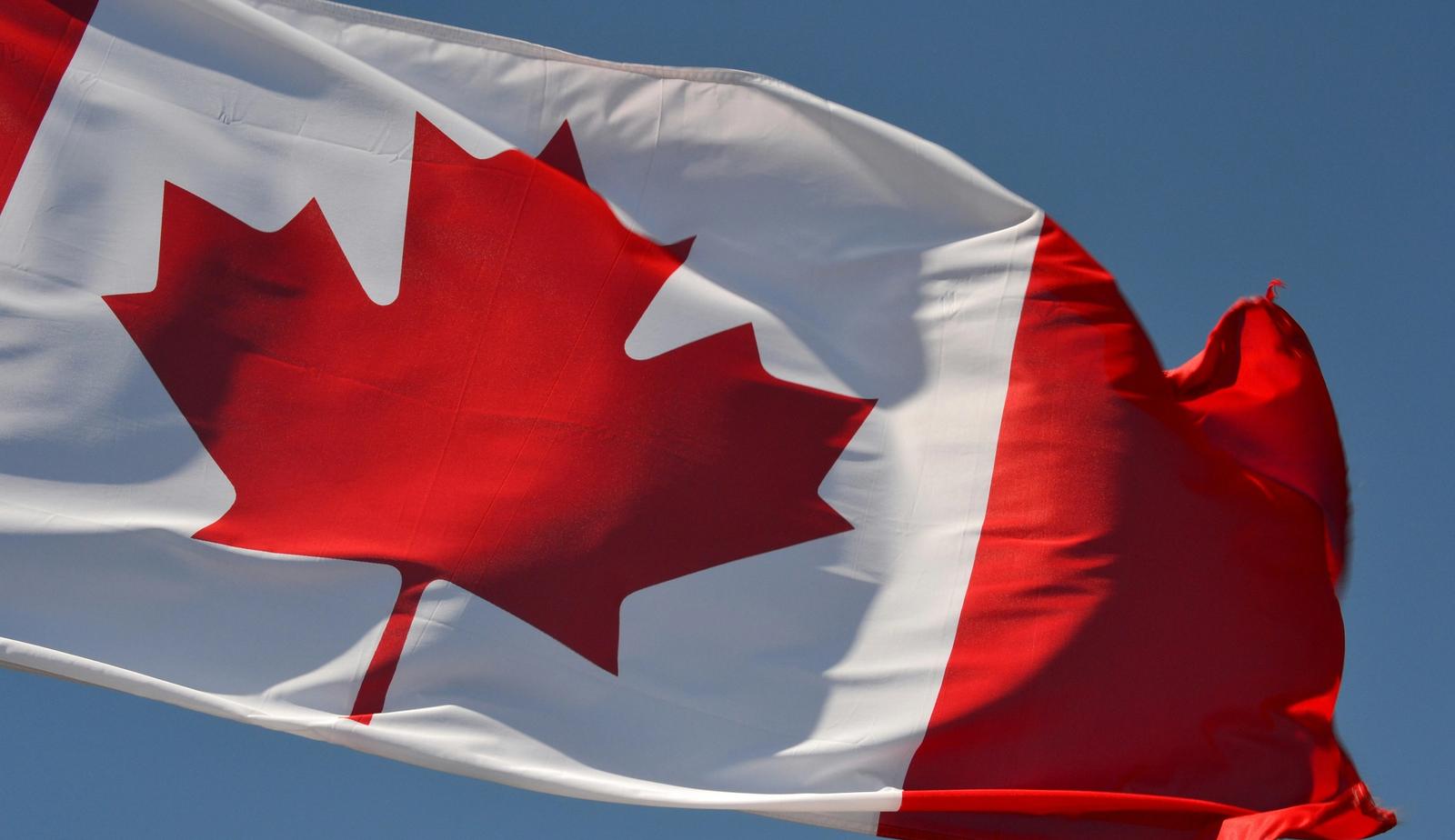
Image: Unsplash
The Topline
- It’s Canada Day this week, when the country will be celebrating the 159th anniversary of Confederation.
- Canada was formed on July 1, 1867, when three separate colonies — Ontario and Quebec, Nova Scotia, and New Brunswick — were united into a single dominion within the British Empire and named the Dominion of Canada.
- While parades and barbecues are common, University of Oxford professor Jennifer Welsh told The Globe and Mail in 2008: "Canada Day, like the country, is endlessly decentralized. There doesn't seem to be a central recipe for how to celebrate it — chalk it up to the nature of the federation.”
- Canadian Heritage has created a Spotify playlist featuring the artists performing in this year’s national musical performance, which will be broadcast live from Ottawa on CBC.
Never miss another side to every story
Sign up for The Level's 5-minute newsletter, 3x per week
Thanks for subscribing!
Check your inbox for an email to confirm you're on the list. If there's no email, check your spam filter just in case, then mark us as 'not spam' so that you never miss an issue.
Switch sides,
back and forth
You can get sick without going broke
It's practically a national pastime these days for Canadians to complain about the health-care system. And yes, there are some good reasons to do so.
But on the 159th birthday of this fine nation, it's worth putting that into context — because the problems with our health-care system don't tell the whole story.
The short of it is: you won't lose your house tomorrow if you get sick today. And that's a wonderful thing.
Get hit by a bus and you're billed nothing for the ER, the surgery, or the recovery. It also doesn't come bundled with a second crisis, where you're also deciding whether or not to refinance your home to cover the hospital bills.
In case you haven’t noticed, it’s a not-so-veiled reference to our neighbours to the south. Comparing ourselves to the Americans is another national pastime, so let's indulge just a little bit.
In the U.S., medical costs are linked to roughly two-thirds of all personal bankruptcies. In Canada, that number drops to about one in five — but even that's mostly tied to lost income during illness — rather than hospital bills, because there generally aren't any.
Canada spends 11.2 per cent of its GDP on health care, compared to about 17 per cent in the U.S. — yet we still come out ahead on life expectancy and infant mortality, per the National Bureau of Economic Research.
Admittedly, these numbers look sketchier when compared to other developed nations. Canada ranks second-last on access to care and dead last on timeliness compared to peer nations, while our GDP spend actually exceeds the 9.2 per cent Organisation for Economic Co-operation and Development (OECD) average.
And yet … and yet. Our health-care outcomes rank sixth out of 10 — solidly middle of the pack — and life expectancy here (81.6 years) is above the OECD average (80.3 years).
Our system isn’t perfect. There’s a shortage of family doctors, waitlists for specialists are endless, and hospital beds are in short supply. These are real problems, but they are fixable , with the right kind of policy decisions.
Meanwhile, what the system is intended to do — ensuring everyone in this country has access to care in a way that won't bleed them financially — is still intact, providing care to millions of people.
In 2004, CBC asked Canadians to vote on the single greatest person in the nation's history, and they picked Tommy Douglas, the Saskatchewan premier who spearheaded medicare and is largely responsible for its implementation across the country.
That's kind of a big deal, even if it’s a 22-year-old poll. It’s never been revisited, which means Douglas still reigns supreme.
Think about it. This isn't a prime minister, entertainer, or athlete. Canadians chose a provincial politician whose legacy is tied to a policy decision.
American food, retailers and entertainment are pretty much everywhere in Canada. Yet one thing from the U.S. has never taken hold: its health-care system.
That’s because Canada has always been sensible. The fact we’ve maintained universal healthcare, in spite of all its problems, is easily the best proof of that.
Nice and boring since 1867
Comedian and former podcaster Marc Maron perhaps best articulated the feelings Americans have when visiting Canada: there's "no feeling of the psychic pollution of the States" when they’re up here.
Maron has since applied for permanent residency here, telling the Canadaland podcast in July 2023 that within 20 minutes of landing, he can feel that "the cancer isn't here."
That’s nice, and yes, just one supremely anxious comedian's opinion. It’s also not that far off from the data-backed reality.
For example, Canada isn't dragging itself into any new wars. No federal party with actual power is running on a platform of burning down the institutions (at least, not yet).
And whatever you think of Prime Minister Mark Carney or Conservative Leader Pierre Poilievre, neither man is advocating for the imprisonment of the other, or the shooting of protesters in the legs.
That's a low bar, historically speaking. But right now, it's a bar that a lot of countries are tripping over.
France's far-right National Rally held two seats in its National Assembly a decade ago. Today, it holds 123. Germany's right-wing Alternative for Germany held zero seats in the Bundestag in 2016. Today it's the second-largest party, with 150.
Canada has never produced anything close to that level of extreme politics. Researchers point to the country's "brokerage politics" tradition, favouring deliberately bland parties built to win the middle, rather than mobilize the fringe, as a big part of why.
Then there’s the media landscape, which in the U.S. has become weaponized on both sides of a turbulent culture war. It feels omnipresent, confusing to parse, and heavy.
In Canada, the news is … just the news. Canadians trust their news media far more than Americans: 37 per cent here versus 25 per cent down south, according to the 2026 Reuters Institute Digital News Report.
We’re not just accepting of the news, either — we’re more accepting of each other. Academic researchers studying partisan animosity in both countries found Canadians' hostility toward the opposing political tribe is real, but nowhere near the intensity that's taken hold in the U.S.
All of this creates a culture of stability, even boredom. Paranoia seems to be legislated right out of the social consciousness. Paranoia is a difficult thing to quantify, of course, but it just feels different here than when visiting many other countries.
Then again, it’s not all sunshine either. The 2026 World Happiness Report delivered Canada’s worst performance in the 14 years it's been published, ranking 25th out of 147 countries — down from sixth a decade ago.
Meanwhile, anti-immigrant sentiment has climbed sharply since 2022, and Alberta Premier Danielle Smith is still pushing a referendum on separating from the rest of the country. Not exactly sensible.
But while these are the headlines that go viral and fuel the imaginations of Redditors and commenters on Facebook, actual support for Alberta separatism sits at 18 per cent, down from 28 per cent in January. Another 72 per cent would vote to stay.
This all tracks with the real-world experience of Canadians, when they show up for one another offline. A 2026 global survey ranked Canada the friendliest country on Earth.
That’s the best part of Canada. It’s a peaceful, neighbourly society, built on decency and respect for one another, rather than any true tribalism or retaliation.
Perhaps now more than ever, it’s something to celebrate this Canada Day.
