



Stephen Smysnuik
Canada’s wildfire smoke: Do the Americans have a point?
Canada’s wildfire smoke: Do the Americans have a point?
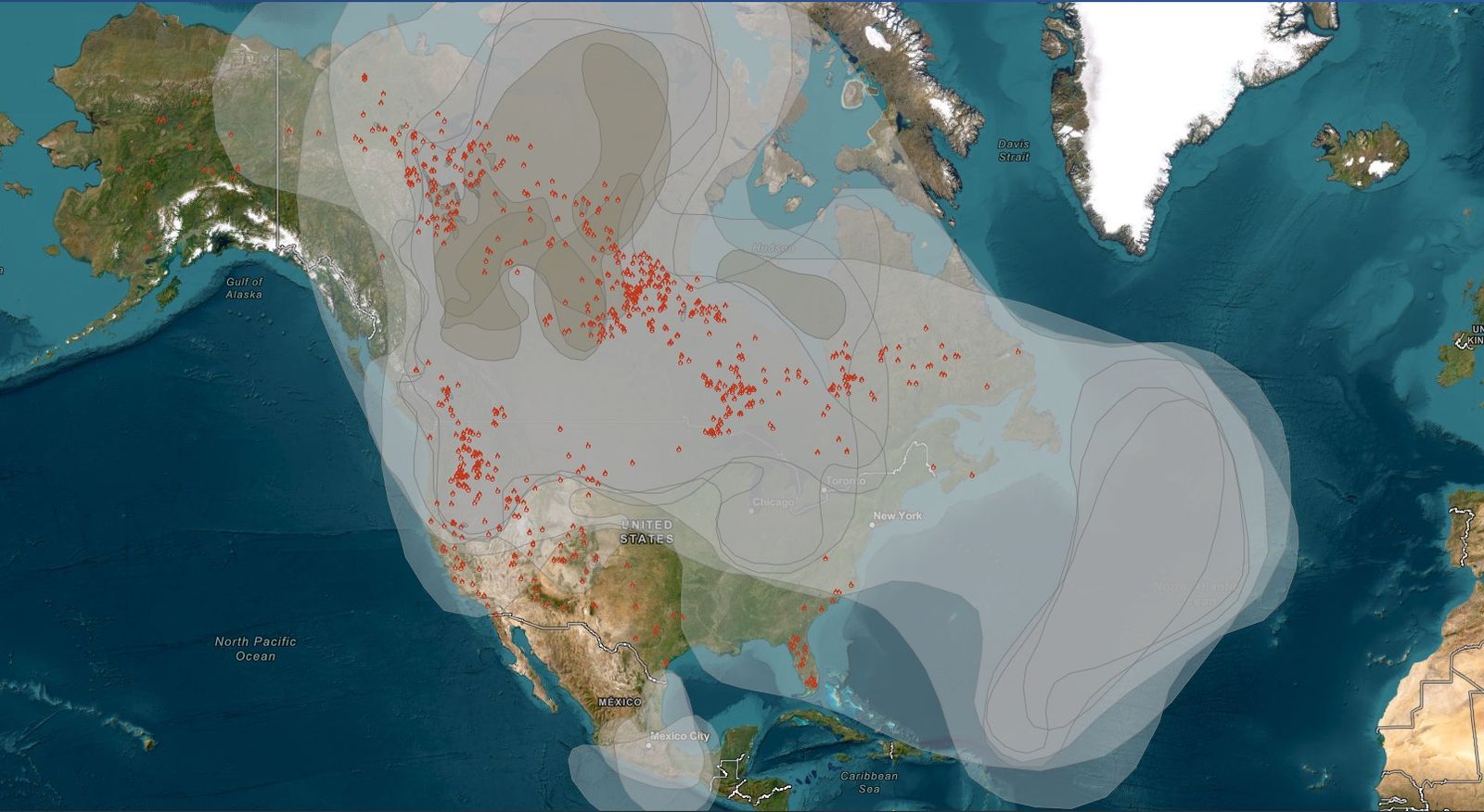
Image: fire.airnow.gov
The Topline
- U.S. President Donald Trump has threatened to add wildfire pollution costs to existing tariffs on Canada, accusing the country of “willful negligence” in forest management.
- Trump’s comments came after four Republican members of Congress from Michigan accused Canada’s federal and provincial governments of failing to invest in “forest thinning, fuel reduction, prescribed burns and stronger enforcement against arson.”
- Much of the eastern U.S. has been blanketed in wildfire smoke, in part from fires burning in Ontario and Manitoba, affecting New York City, Chicago and Washington, D.C., among other cities.
- Ontario Premier Doug Ford called the tariff threat “a bunch of rubbish,” noting Canadian crews helped fight U.S. wildfires last year without reciprocal help.
Never miss another side to every story
Sign up for The Level's 5-minute newsletter, 3x per week
Thanks for subscribing!
Check your inbox for an email to confirm you're on the list. If there's no email, check your spam filter just in case, then mark us as 'not spam' so that you never miss an issue.
Switch sides,
back and forth
Canada’s simply not doing enough
It’s easy to dismiss President Trump’s comments on Canada’s wildfire smoke as absurd, given his record of clownish — yet destructive — behaviour.
But that doesn’t mean the accusations have no merit. When it comes to prevention specifically, Canada should be doing more.
We’re the only G7 country without a national wildfire response agency. Coordination runs through the Canadian Interagency Forest Fire Centre (CIFFC), a body that pools provincial and territorial resources rather than commanding its own.
This means there’s no single agency that owns the problem. Equipment, aircraft and firefighters are requested and shared piecemeal between provinces and Ottawa in the middle of a crisis, rather than deployed through one command structure that can move quickly and plan years ahead.
A Canadian Senate committee reached a similar conclusion. In its June 2026 report , “Canada on Fire,” the Standing Senate Committee on Agriculture and Forestry — after consulting nearly 80 witnesses over more than a year — found that three consecutive record wildfire seasons have shown climate change is accelerating fire behaviour “beyond the capacity of existing systems” and that prevention efforts “have not kept pace.”
The committee’s list of gaps includes an aging aircraft fleet, a shortage of fire-management expertise and no national co-ordinating body.
The Canadian Forest Service was gutted from 2,200 staff to 700 in the 1990s and has never been rebuilt to match today’s increasingly intense and frequent wildfire seasons.
This is a pattern playing out across the country. Ontario — which is experiencing one of its most severe wildfire seasons on record and is the source of much of the smoke drifting south this month — budgeted only $150 million for firefighting in 2026-27, about 55 per cent of the roughly $271 million it ended up spending the previous year.
Meanwhile, federal scientists studying fire risk are being cut , even as those same scientists warn that the threat is worsening.
These gaps all point to the same conclusion: A faster, better-resourced system would catch fires while they’re still small.
It won’t stop every fire — our climate is getting hotter and drier, so wildfires are an increasing threat regardless.
But smaller fires caught early will burn less area — and less area burned means less total smoke for Canadians and Americans alike.
The smoke blows both ways, bucko
Wildfire smoke doesn’t carry a passport — it goes, as the song says, whichever way the wind blows.
That should seem obvious to everyone in the wake of President Trump’s threats to impose additional tariffs on Canada for failing to manage its wildfires and blanketing the East Coast in smoke.
But American wildfires are responsible for much of the worsening air quality in parts of B.C. Never mind that Minnesota’s wildfires are also contributing to the haze over Washington, D.C.
So an apology card from Trump must be on its way, right? Because treating wildfire smoke as something Canada “does” to the U.S. ignores that the exposure runs in both directions — and there’s really only one true way to fix it: burn fewer fossil fuels.
Climate scientist Jonathan Overpeck told CBC News that realistically tackling wildfire smoke means fighting climate change itself — and a large part of that means weaning ourselves off fossil fuels.
His comments echo a landmark 2023 study published in the peer-reviewed journal Environmental Research Letters, which traced a direct line from a group of the world’s largest fossil fuel producers, including several major American oil producers , to the growing wildfire trend in western North American forests.
That’s the piece Trump — and his $700-million US investment last month in “clean, beautiful coal” — conveniently misses. It’s easier to blame Canada than do what is actually required.
More forest management, increased national co-ordination, and better-funded science can help catch fires while they’re still small. But it’s the hotter, drier conditions driven by emissions that are fuelling this crisis in the U.S., Canada and pretty much everywhere else .
This is especially important since most of what’s burning is boreal forest — a landscape covering roughly three million square kilometres that’s fundamentally different from the pine forests found in the western U.S., where thinning and prescribed burns are proven fire-reduction tools.
Boreal forest burns infrequently but with high intensity, on cycles measured in decades and occasionally centuries. It’s a different beast altogether from the wildfires seen in places such as the Sierra Nevada that have affected communities throughout the western U.S. in recent years.
Proven methods — like thinning and prescribed burns — used to prevent those fires don’t work in the boreal forest. They would be too expensive to apply across a landscape that size, and they wouldn’t stop the extreme fires from producing most of the smoke anyway.
Even so — and despite what critics say — Canada has been spending on prevention.
Since 2020, Ottawa has invested $12 billion in forest sustainability, fire prevention and emergency programs. For 2026, the federal government secured 10 new firefighting aircraft and committed nearly $317 million over five years to lease aerial firefighting capacity through CIFFC.
Yes, Canada can, and should, do more on prevention. But reducing emissions that cause the hotter, drier conditions — which lead to bigger fires and more smoke — should also be a priority if any real progress is going to be made.
Instead, framing this as a Canadian forestry problem hides the reality that emissions — whether from Alberta’s oilsands or from American coal — are what’s actually driving the smoke.
Do you think more people should see another side to every story?
CHIP IN TO SUPPORT THE MISSION ✨
Every dollar goes to hiring more journalists so we can explain more topics, more often, and reach a wider audience.
