


Neil Malik
Immigration targets: Did Carney’s budget pull a fast one on us?
Immigration targets: Did Carney’s budget pull a fast one on us?
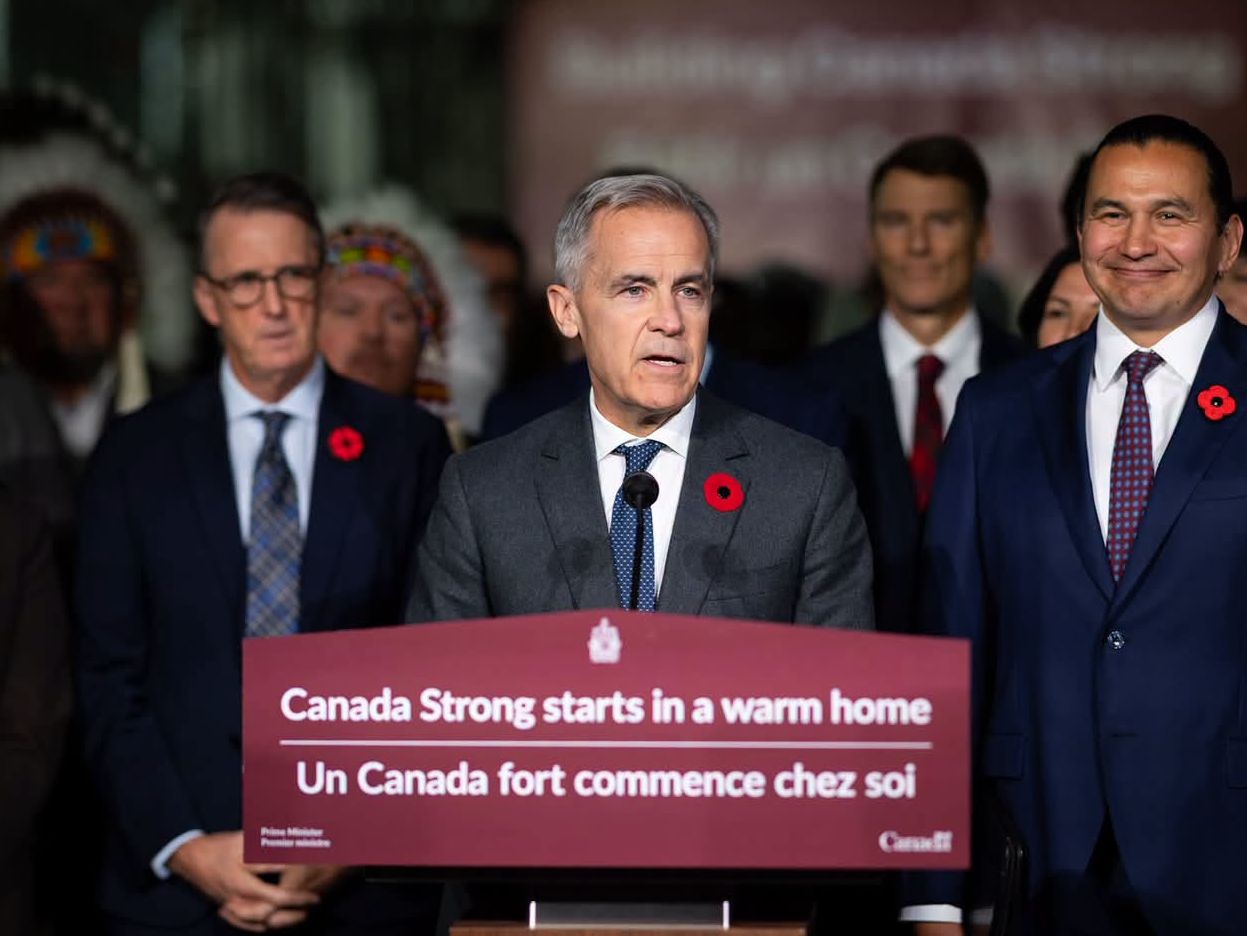
Photo: Mark Carney, Facebook
The Topline
- The Liberal government outlined its approach to immigration as part of Budget 2026 and the 2027–2029 Immigration Levels Plan.
- The Immigration Levels Plan for 2027-2029 is the official document that sets out the annual targets that Immigration, Refugees and Citizenship Canada (IRCC) is instructed to pursue.
- The budget shows annual targets for the next three years remaining at 380,000 new permanent resident (PR) admissions, but critics are questioning whether the total number of PR admissions could be significantly higher.
- Prime Minister Mark Carney has acknowledged that immigration levels under Justin Trudeau’s government were “far too high” but in a recent interview with the New York Times, hinted that he was contemplating a “controlled increase” in population levels.
Never miss another side to every story
Sign up for The Level's 5-minute newsletter, 3x per week
Thanks for subscribing!
Check your inbox for an email to confirm you're on the list. If there's no email, check your spam filter just in case, then mark us as 'not spam' so that you never miss an issue.
Switch sides,
back and forth
The numbers don’t lie, except this time
How does 380,000 new permanent residents next year suddenly become 662,000?
You’ll have to do the math yourself.
The 2026 federal budget shows an annual target of 380,000 in 2027, 2028, and 2029.
But then — in a separate bullet — it’s offering another 200,000 people already living in Canada a chance to become permanent residents by the end of 2027.
Say what now?
Two other measures from last year’s budget could then add up to another 82,000 admissions, according to analysis from New Canadian Media (NCM).
That could add up to a grand total of 446,000 in 2026 and 662,000 in 2027 — far higher than the 380,000 annual target that everyone was first promised .
As Andrew Griffith, a former senior immigration official himself, told NCM, “temporary [residents] should mean temporary.” It’s a distinction that goes to the heart of our immigration system.
If every available spot gets filled, you get 662,000. That’s about 37 per cent higher than the 483,655 permanent residents Canada admitted in 2024, the year Ottawa uses for comparison in its own budget chart.
A majority of Canadians are calling on the country to accept fewer immigrants and temporary residents in 2027, according to a Nanos Research survey released just before the budget.
It’s probably because they’re still haunted by decisions made by former Prime Minister Justin Trudeau. The Globe and Mail famously argued back in 2024 that “Justin Trudeau’s legacy will be destroying the Canadian consensus on immigration.”
Conservative Leader Pierre Poilievre argues that immigration levels should reflect the jobs, housing, and health care available. And in Alberta at least, Canadians seemingly agree with that, according to last month’s referendum results .
Case in point: In October, unemployment among people in Canada aged 15 to 24 was 13.7 per cent, compared with 6.7 per cent overall.
Whether Canada will actually reach 662,000 depends in part on whether provinces and territories opt in to the new worker stream and how many places Ottawa fills.
That said — If Ottawa is targeting 220,000 new temporary worker arrivals in 2027 and Carney says the plan is sustainable, the least he could do is explain which labour gaps those workers are expected to fill and where.
Or even better —- maybe stop hiding the true numbers from Canadians.
They’ve been here all along
If a newcomer to Canada has lived here for years, doing the same job for the same employer, and that employer keeps renewing their permit, is that still considered “temporary"?
That was basically Prime Minister Mark Carney’s point when he defended his government’s immigration plan to reporters last week.
If someone built a life here, and their employer still needs them, that makes them “effectively permanent residents, and we're recognizing that," Carney said . "It's the right thing to do and … it's within the context of a sustainable immigration system."
Budget 2026 clearly says this initiative is simply “offering a fast track to permanent residency for many temporary workers who are already working in Canada and contributing to their communities.”
It also says this is a one-time increase of up to 200,000 people already living in Canada who will receive a chance to become permanent residents by the end of 2027.
Provinces and territories would help select workers based on local labour needs. About half of the spaces would also help clear pending applications on humanitarian and family reunification grounds, including people from Hong Kong and Ukraine.
Conservative Leader Pierre Poilievre claims that more newcomers put more strain on housing, health care, and other social services. Not to mention — Alberta had an entire referendum on this, just a few weeks ago.
But this is different. This particular group is already in the country — and has been for years.
Those hospital wait lists? Those housing shortages? This announcement changes nothing and won’t make anything worse off than it already is.
Meanwhile, the budget also reports that new international student arrivals fell 71 per cent and new worker arrivals fell 57 per cent between January and August 2026 compared with the same months in 2024.
Excluding the 200,000 newcomers already in Canada, Ottawa is targeting 370,000 new temporary worker and student arrivals annually through 2029. That’s down from about 686,000 in 2024.
And as much as some Canadians feel otherwise, slashing immigration levels down to the bone isn’t smart. “It ignores the demographic realities facing Canada’s population trend, as well as the opportunities that come with immigration helping a nation achieve its economic potential,” said this professor from the University of Toronto Rotman School of Management.
That’s exactly what Carney’s trying to avoid here.
You can still slow the pace of new arrivals — but also give people who have already spent years working here the certainty to plan for a future.
Do you support journalism that helps Canadians navigate difficult issues with more context and less outrage?
Every dollar goes toward helping Canadians see another side to every story so they can form their own opinion.
