



Maxwell Shepherd
Canada’s World Cup party is over. Was it worth it?
Canada’s World Cup party is over. Was it worth it?
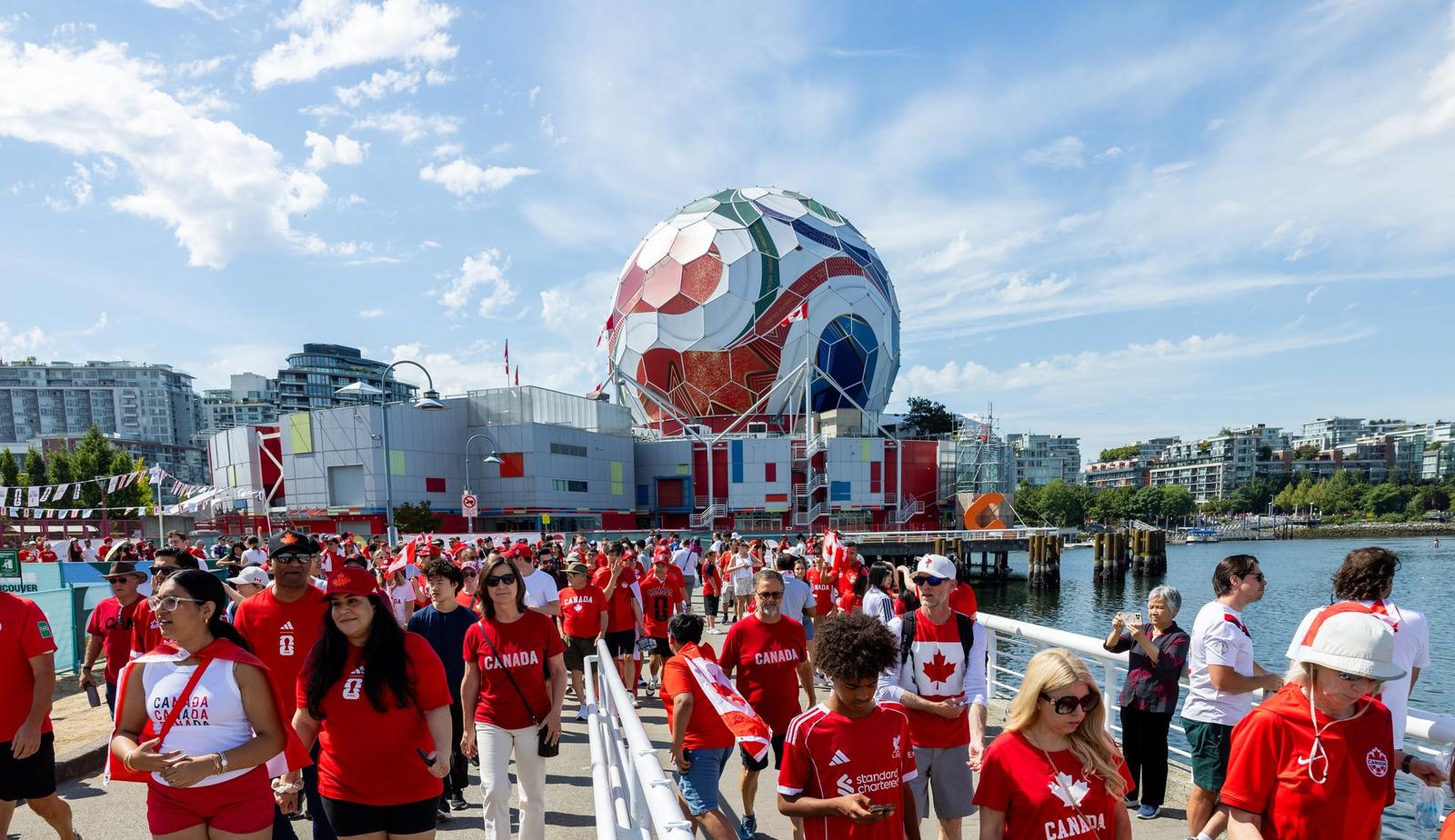
Image: BC Gov Photos, Flickr
The Topline
- Canada’s duties as a host country have wrapped, with Vancouver’s final game played on July 7.
- Vancouver and Toronto hosted a combined 13 matches, including Canada’s first-ever World Cup victory.
- A recent Research Co. survey showed more than a third of Canadians are more interested in the national team after its 2026 FIFA World Cup run.
- Some businesses and tourist areas saw a boost during the tournament, but industry groups in both Vancouver and Toronto indicated hotel occupancy in June was down compared to the same time last year
Never miss another side to every story
Sign up for The Level's 5-minute newsletter, 3x per week
Thanks for subscribing!
Check your inbox for an email to confirm you're on the list. If there's no email, check your spam filter just in case, then mark us as 'not spam' so that you never miss an issue.
Switch sides,
back and forth
Canada got its soccer moment
From the moment Canada was named a host country, there were questions over whether hosting the World Cup would actually be worth the price.
The concerns were legit. In May, Canada’s Parliamentary Budget Officer projected the total cost of hosting would be a whopping $1.07 billion — or a cool $82 million per game.
But after weeks of packed stadiums, celebrations across the country, and Canada’s squad reaching the Round of 16, it’s impossible to deny the tournament gave Canadian soccer a real boost and Canadians one hell of a good time.
For the first time, the World Cup wasn’t a distant event happening somewhere else. The party was happening in our neighbourhood and we could experience it.
Fans filled the streets wearing national team jerseys, businesses welcomed visitors from around the world, and thousands experienced a level of soccer excitement rarely seen in the country.
The numbers reflected that excitement. All seven matches at BC Place were sellouts, while Toronto Stadium reached 99 per cent capacity over six matches. More than 330,000 people attended Vancouver’s FIFA Fan Festival during the first two weeks of the tournament.
But the biggest legacy won’t come from a spreadsheet. It’s the next generation of Canadian players and supporters who saw the sport at its highest level, right in their own backyard.
Recent polling from Research Co. found more than seven-in-ten Metro Vancouver residents believe the World Cup will have a positive impact on Canada, B.C. and Vancouver — higher than when the same question was asked following the 2010 Winter Olympics.
That’s a significant shift. Before the World Cup, there were strong opinions on whether the event would create lasting value. Now that people have experienced it, the poll suggests Canadians are more optimistic — at least in Metro Vancouver.
Research Co. also found 21 per cent of Canadians now describe themselves as soccer fans who truly enjoy watching the game, up six points from December 2022.
The growth of soccer in Canada is no joke. Canada Soccer calls it the largest participatory sport in Canada, with nearly one million registered active participants across about 1,200 clubs, and “the fastest-growing sport in the country.”
Young players lucky enough to attend matches watched international stars play in their own city, instead of seeing the tournament unfold on TV from somewhere else.
That type of inspiration is difficult to measure, but it’s exactly the kind of impact supporters believe makes hosting worthwhile.
Of course, a fabulous party doesn’t erase every concern. The cost was significant, FIFA remains a controversial organization, and many local fans were priced out of attending matches.
But if you agree that major sporting events should create memories, grow communities and inspire future generations, Canada’s World Cup experience delivered on all three.
Canada got its soccer bill
We just paid over a billion dollars to host a party that most of us couldn’t afford to attend.
Let that soak in for a moment, especially as you consider our crumbling infrastructure or the last time you sat for hours in a jam-packed hospital waiting room.
There’s no denying that the World Cup created unforgettable moments across Canada. Packed stadiums, vibrant fan festivals and a renewed passion for soccer made for a once-in-a-lifetime celebration.
But just like a dream vacation, the fun grinds to a halt once you fly home and receive the credit card bill.
Supporters of the tournament pointed to the economic boost it was expected to bring. A Deloitte report projected the World Cup could generate $940 million in economic output for the Greater Toronto Area alone.
Early results, however, tell a more complicated story.
Businesses along Toronto's waterfront enjoyed one of their best summers in years thanks to the steady flow of fans. But elsewhere, many businesses reported only modest gains, suggesting the tournament's economic impact only helped certain neighbourhoods rather than lifting the entire city.
Data on credit card usage provided by Moneris showed spending in the city of Toronto saw only a modest boost from June 12 to 26, falling short of the 2024 Taylor Swift Eras Tour.
Taylor Swift also never asked Toronto Mayor Olivia Chow to sign a lopsided hosting agreement that would cost the city $380 million to fulfill.
Vancouver Mayor Ken Sim tried to downplay the costs to his city by telling CTV News this week, “We’re on the hook for $5 million.”
“We basically did the best deal — I think, ever — in the history of hosting World Cups,” he added.
But that claim deserves some scrutiny, especially given how Sim wildly threw numbers around during an interview with CTV News two years ago.
“We're getting the equivalent of 30 to 40 Super Bowls,” he said, while also declaring, “It’s not my job to crunch numbers on these things.”
Moshe Lander, a sports economist with Concordia University, calls the World Cup an “economic sinkhole.” In an op-ed for Maclean’s, he wrote , “Research and experience show that the promised economic gains for large-scale sporting events like the World Cup never seem to materialize.”
Unlike the 2010 Vancouver Olympics, the World Cup leaves behind a less obvious and tangible legacy. Vancouver and Toronto saw no new transformative infrastructure projects that would continue benefiting residents for decades.
None of this means hosting the World Cup was a complete failure. Canadians embraced the event, and the atmosphere was unlike anything the country had experienced before.
But if governments are going to invest hundreds of millions of public dollars into global sporting events, unforgettable memories shouldn’t be the only measure of success. Lasting benefits should be too.
Do you think more people should see another side to every story?
CHIP IN TO SUPPORT THE MISSION ✨
Every dollar goes to hiring more journalists so we can explain more topics, more often, and reach a wider audience.
