



Neil Malik
CBS News fires Scott Pelley from ‘60 Minutes’ — Was it justified?
CBS News fires Scott Pelley from ‘60 Minutes’ — Was it justified?
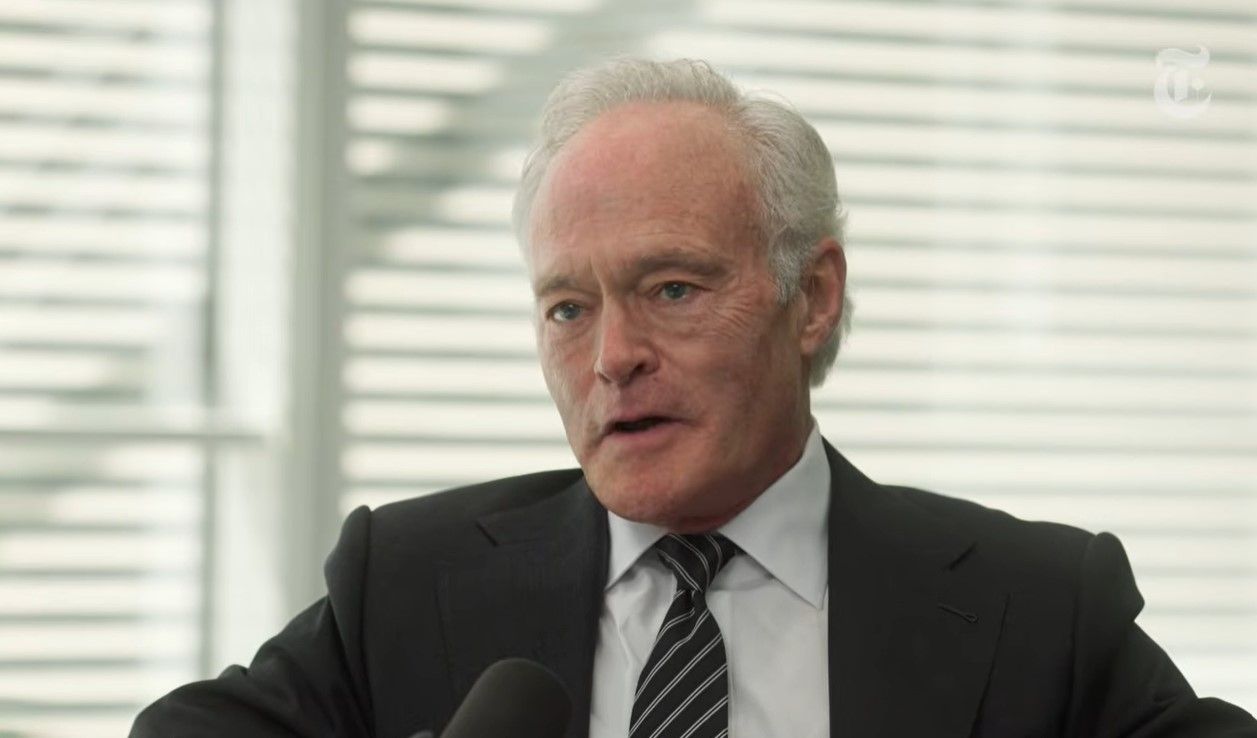
Image: @theinterviewpodcast, Youtube
The Topline
- Veteran ‘60 Minutes’ correspondent Scott Pelley was fired by CBS News, ending his 37-year run with the network.
- Two other correspondents, Sharyn Alfonsi and Cecilia Vega, were also let go in recent days, along with two producers, Tanya Simon and Draggan Mihailovich. A third correspondent, Anderson Cooper, resigned from the show after 20 years.
- The turmoil comes after Bari Weiss, founder of The Free Press, was appointed to lead CBS News late last year, and Nick Bilton was named the new executive producer of ‘60 Minutes’ just last week.
- Pelley was fired the day after meeting Bilton for the first time in a staff meeting, where he reportedly said Weiss was "murdering the show" and accused Bilton of having "slender qualifications" for the job.
- Weiss was expected to bring wholesale changes to CBS News, telling staff in a town hall earlier this year, “We are not producing a product enough people want.”
Never miss another side to every story
Sign up for The Level's 5-minute newsletter, 3x per week
Thanks for subscribing!
Check your inbox for an email to confirm you're on the list. If there's no email, check your spam filter just in case, then mark us as 'not spam' so that you never miss an issue.
Switch sides,
back and forth
Don't chew out the new boss
If you’re a fan of ‘60 Minutes,’ Pelley’s firing is a lowkey shock, no doubt.
He’s the big cheese. The one who gets the honour of saying, “Those stories and more, tonight on ‘60 Minutes.’”
After Pelley gave an extensive interview with The New York Times, there are moments you can’t help but groan at, like when he likened the changes happening at CBS to “your spouse being murdered.”
CBS News is a business, just like any other. New leaders come and go. Strategic priorities change over time. Employees get hired and fired — even those who have been with the company for decades.
Pelley’s over-the-top analogy signals he’s out of touch with ordinary viewers who are forced to deal with workplace changes all the time.
When describing the firing of a producer who was told to be out of her office by 5 p.m., Pelley rhetorically asked, “What company in the world treats their precious people in that way?”
All of them, Scott. All of them.
When people lose their jobs, they’re usually escorted from the workplace immediately. It’s harsh, but that’s just how it’s done.
Is Pelley a privileged 68-year-old man with blinders on, who fully believed it would be reasonable to berate his new boss and insult his qualifications in a staff meeting? It’s starting to sound like it.
If Pelley wasn’t happy about the choice for new leadership, that’s totally fair.
How about meeting the new boss over dinner in a fancy Manhattan restaurant? Scott’s treat.
Or shooting a text to David Ellison, CEO of Paramount Skydance, the parent company of CBS, asking for a chat?
The more Pelley spoke in his interview about correspondents receiving feedback from Weiss that certain stories weren’t “balanced” enough, the more disconnected from reality he sounded.
He suggested Weiss intended to "push the balance a little further in another direction" to align more closely with the president's views.
He’s probably not wrong about that. But the issue with his claims is that ‘60 Minutes’ wasn’t exactly always neutral until Weiss walked through the door.
CBS News has long leaned to the centre-left. Trump leans hard to the right. It is what it is.
If ownership of a media company suddenly changes hands and — for whatever reason — new management now wants the reporting to lean in another direction, that’s a business decision they have every right to make.
It might work out. It might not. But that’s their choice.
Viewers might not like it, but they can stop watching and choose another news source.
If employees don’t like it, they have the option of staying or leaving the company. Some will choose to stay and some will choose to leave. Neither is an easy decision to make, but both are respectable.
But no matter what they choose, just like in any business, here’s a tip: if you don’t want to get fired, don’t chew your new boss out in front of your coworkers.
The numbers were on his side
If it’s not broken, don’t fix it.
That’s essentially Pelley’s argument for pushing back on his new bosses. If you look at the numbers, he makes a good case.
In an extensive interview with The New York Times,, Pelley highlighted that the show saw nine per cent growth in its broadcast audience over the last season and that level of growth is "unheard of in broadcast television."
He pointed to 190 per cent growth in the program's online presence, then refuted the idea that the show is outdated by noting it has been available "24/7 globally online for well over a decade" and just last month it won two Emmy Awards.
Because the show was "riding high" with these metrics, Pelley said the wholesale firing of senior staff and correspondents was "incredibly difficult to understand" and lacked any justification.
Considering it’s the same network that fired Stephen Colbert when his show was rated number one in its timeslot, it’s not that difficult to see what’s going on here.
David Ellison is the CEO of Paramount Skydance, the parent company of CBS. Much of this controversy can be traced back to his family’s relationship with President Donald Trump.
Prior to the merger, Trump was suing CBS for $20 billion over the editing of a ‘60 Minutes’ interview with Kamala Harris. Meanwhile, Paramount, the owner of CBS, needed the Trump administration’s approval to merge with Skydance, the company founded by Ellison.
CBS ultimately settled with Trump for $16 million and the merger was approved three weeks later.
Hmmm.
Days after the settlement was criticized on air by Colbert, his show was cancelled. Trump posted to Truth Social that "I absolutely love" that Colbert was "fired."
Hmmmmmm.
Pelley was calling out the obvious. The Trump administration found a way to assert itself over CBS and changes were being made to keep the dear leader happy.
It goes against every ounce of being a journalist. These are professionals who pride themselves on independence, trust and integrity. They are often passionate.
Pelley was simply doing what journalists do best: highlighting BS when they see it.
Pelley joined the network in 1989, reported for ‘60 Minutes’ beginning in 2004, anchored the CBS Evening News from 2011 to 2017, and won dozens of major journalism awards. I’d say he’s earned the right to call it like he sees it.
Another aspect Pelley got right? Weiss and Bilton are in way over their heads.
Neither has any experience in broadcast journalism. Weiss even admitted to staff during a town hall that she was new to broadcasting and unfamiliar with the “specific logistical nightmare” that occurred after making a last-minute decision to postpone a story from airing.
Pelley described Weiss running CBS News as him being asked to fly a Boeing 747 with 400 people on board to Paris: “I’m going to decline because I don’t have a clue.” He said Weiss had no business running an organization this size in a space she didn’t understand.
As for meeting Bilton for the first time and insulting his qualifications in a staff meeting, should Pelley have voiced his concerns some other way?
Definitely.
But is it a fireable offence when the most high-profile personality of your entire newsroom is flagging legitimate concerns about the future direction of the organization?
Definitely not.
Like what you see?
Want more people to discover The Level?
Every dollar goes to hiring more journalists so we can publish more stories, more often, and reach more people.
